
- An MIT study using fMRI brain imaging found that conversational turns — not raw word counts — predicted Broca's area activation in 4- to 6-year-olds, even after controlling for parent income and education (Romeo et al., Psychological Science, 2018).
- The original "30-million-word gap" research has been complicated by replication work, but the underlying finding — that high-quality back-and-forth conversation builds language and literacy — is well established (Sperry et al., Child Development, 2019).
- Quality of interaction outranks quantity. A 30-second exchange where you respond to your child's interest beats 10 minutes of reading at them (Hirsh-Pasek, Brookings).
- A preschooler engaged in roughly 1,000+ conversational turns per day is in the protective zone for kindergarten language readiness — most American children fall well short.
- No app replaces this. Brain imaging shows the response to back-and-forth conversation does not appear when the same words come from a screen.
Most preschool marketing focuses on the alphabet, sight words, and "early reading" curricula. The neuroscience points somewhere else entirely. The single best-documented predictor of school-age reading and language achievement is not how many words a parent uses, and not whether the child can recite the ABCs at 4. It is the back-and-forth pattern of conversation between adult and child. The brain-imaging data is unusually clean about this.
This guide explains what an MIT/Harvard team actually found when they put children in an MRI machine, why "conversational turns" matter more than vocabulary lists, and what the data says parents in Riverside, Corona, and La Sierra can do this week. No flashcards, no apps. Just talking — but a specific kind of talking.
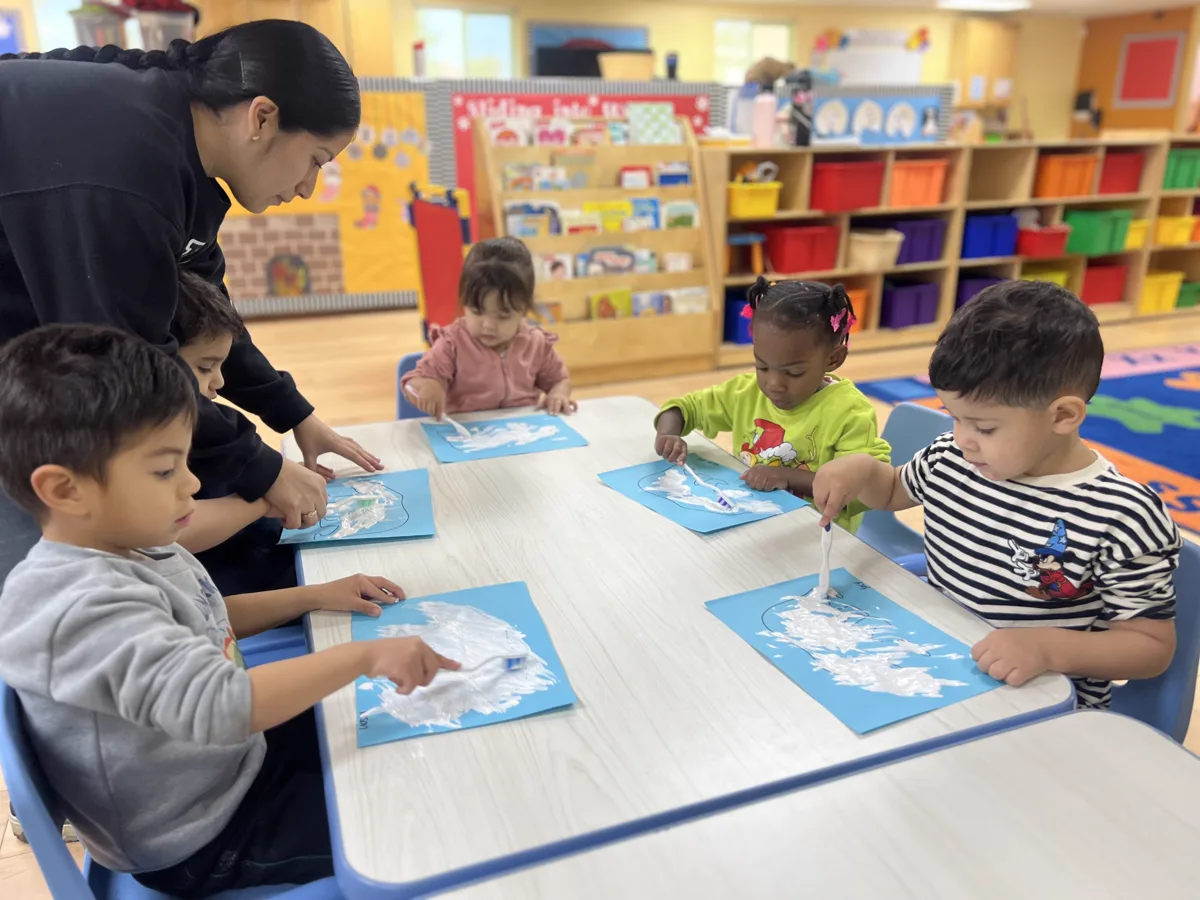
how our daily classroom conversations support language
What Did MIT Actually Find About Children's Brains?
Rachel Romeo and colleagues at MIT, working with Harvard collaborators, published one of the more striking developmental neuroscience findings of the last decade in 2018. They put 36 children ages 4 to 6 in an fMRI scanner, recorded their daily home conversations using LENA audio devices, and asked: what aspect of language exposure best predicts brain activation in the regions responsible for processing language?
The answer was not parent income. It was not vocabulary size. It was not even the total number of adult words the child heard. It was the number of conversational turns — back-and-forth exchanges between adult and child — that best predicted activation in Broca's area, the classic language-production region (Romeo et al., Psychological Science, 2018). The effect held after controlling for parent income, parent education, and children's IQ.
That finding inverts a generation of preschool-marketing logic. The brain is not a sponge passively absorbing vocabulary. It is a participant. The development of language circuitry depends on the child being heard and answered — repeatedly, all day long.
[CITATION CAPSULE] Romeo and colleagues' 2018 fMRI study of 36 children ages 4 to 6 found that conversational turns — back-and-forth verbal exchanges between adult and child — predicted Broca's area activation more strongly than total adult word counts or socioeconomic status, suggesting interactive conversation, not passive language exposure, builds the brain's reading-readiness architecture.How Many Conversational Turns Should a Preschooler Have Per Day?
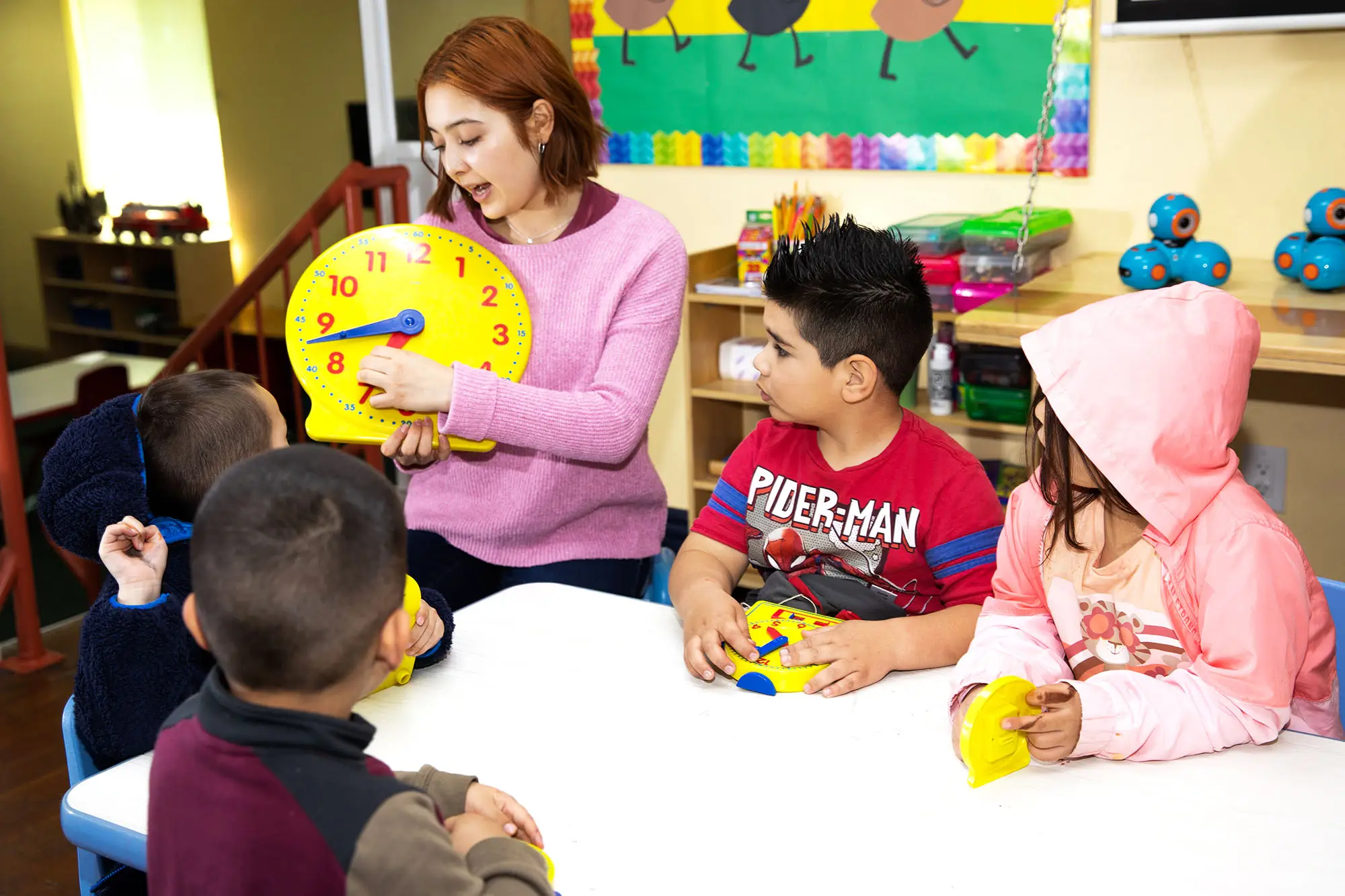
The research tools that track this — LENA recorders worn by toddlers and preschoolers — generally find a wide spread. Some children in language-rich homes log 1,000 to 1,500 conversational turns per day; others log under 200. The lower end correlates with measurable lags in expressive vocabulary and emergent literacy (Romeo, 2018 and follow-up white-matter work).
One thousand turns sounds like a lot. It is not, broken down across a waking day. A turn is one adult-then-child exchange — a question and an answer, a comment and a response. Sustained meal-time conversation, narrating a walk to the park, reading a book and pausing for the child to reply — these accumulate fast. Background TV does not count. Apps mostly do not count.
The MIT team's follow-up work, using diffusion-tensor imaging, found that the same conversational-turns metric predicted the white-matter density of the arcuate fasciculus — the bundle of fibers connecting Broca's and Wernicke's areas (the language network) (Romeo et al., PNAS, 2018). Conversation, in other words, is laying down literal neural infrastructure.
see how our small-group structure supports back-and-forth talkWhat About the "30-Million-Word Gap"?
Hart and Risley's 1995 study, which estimated that children from low-income families heard 30 million fewer words by age 4 than children from professional families, became one of the most famous findings in developmental psychology — and one of the most contested. A 2019 replication by Sperry and colleagues in Child Development found the gap was substantially smaller and more variable than Hart and Risley's original sample suggested, with significant cross-cultural differences in how language exposure works (Sperry et al., 2019).
What survives intact: quality of interaction matters more than raw word count. Kathryn Hirsh-Pasek and colleagues at Brookings have argued for years that the original "more words, better" framing was a simplification. The MIT brain-imaging work confirmed it experimentally. A child who hears 20,000 words per day in monologue does worse than a child who hears 12,000 in interactive exchange.
[UNIQUE INSIGHT] The implication for parents is liberating, not anxious. You do not need to be an "academic" parent talking constantly to your child. You need to be a responsive parent who asks open questions, waits for the answer, follows the child's lead, and replies to what they actually said. This is closer to how grandparents naturally talk to grandchildren than to how parents talk to a clipboard of milestones.
What Counts as a "Conversational Turn"?
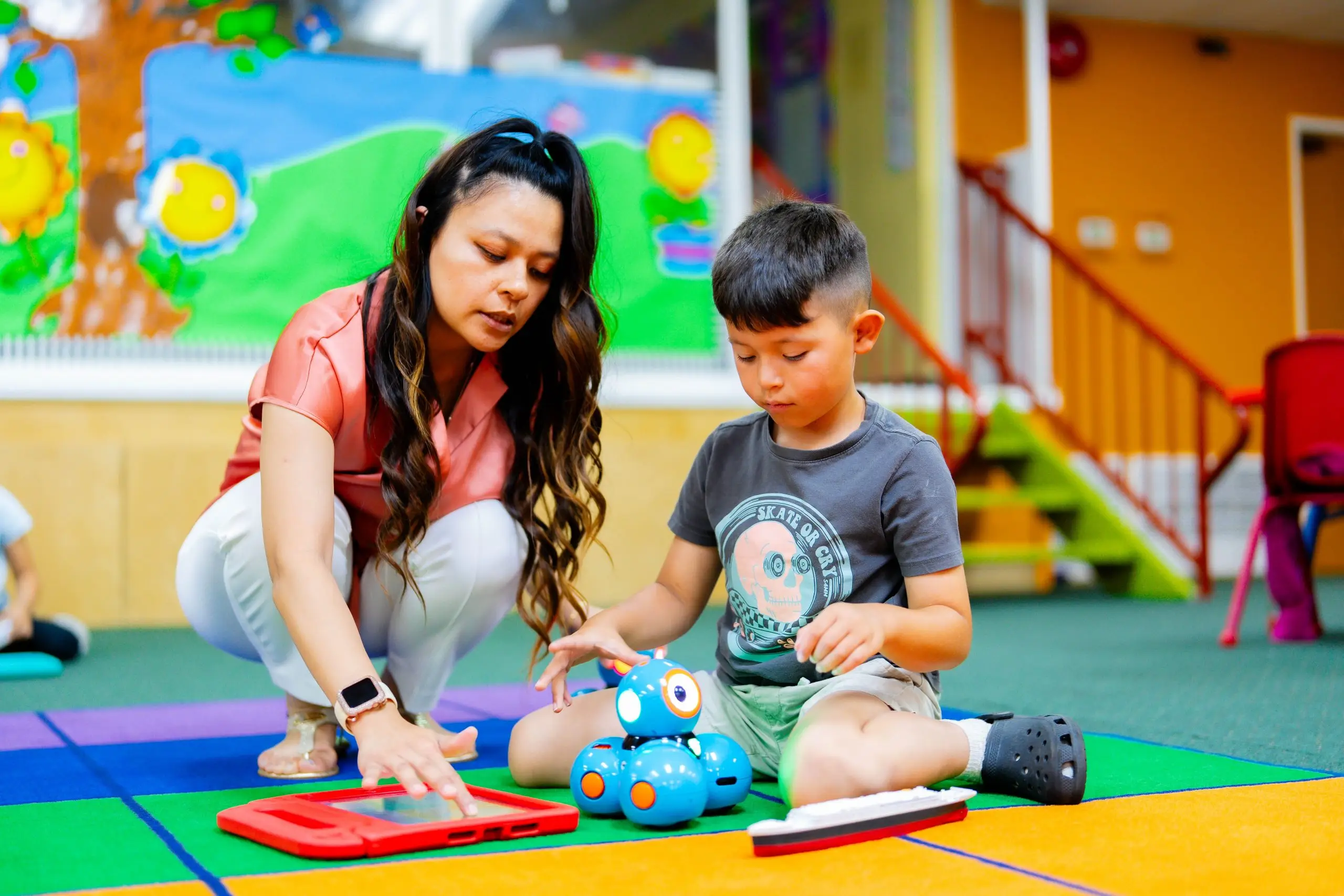
A turn is a verbal exchange that requires both participants to listen and respond. Some examples that count:
- Adult: "What do you think will happen if we mix red and blue?" Child: "Purple!" — one turn.
- Child: "Look, a bird!" Adult: "Where? Oh, I see — what do you think it's doing?" Child: "Eating." — two turns.
- At dinner: child describes their day; adult asks a follow-up question; child elaborates — three turns.
What does not count:
- Reading a book aloud while the child sits silently.
- Background TV, even if "educational."
- Tablet apps, even if voice-based — the brain-imaging response is not the same.
- Multi-child group conversation where most kids are listening, not speaking.
The chart implies a manageable target. A family that fits in a 30-minute one-on-one play block, a 30-minute shared dinner with conversation, and a 15-minute dialogic-reading bedtime is likely already in the 1,000-turn protective zone — without any "extra" effort.
[CITATION CAPSULE] The MIT/Harvard team's PNAS follow-up to the 2018 Psychological Science paper showed that the same conversational-turns metric predicted white-matter density in the arcuate fasciculus — the neural pathway connecting Broca's and Wernicke's areas — providing direct anatomical evidence that interactive conversation builds the literal infrastructure of the brain's language network (Romeo et al., 2018).What Should Riverside Parents Try This Week?
Five evidence-based moves, ordered by leverage:
- Eat one screen-free meal together every day. The dinner-table conversation is the single highest-density turn-generator in most family schedules.
- Switch to dialogic reading. Stop reading at the child and start reading with them. Pause every page. Ask "What do you think will happen?" Wait. Respond.
- Narrate, then ask. "I'm going to wash the carrots — what color are these ones? Why do you think they're called rainbow carrots?"
- Ask about preferences, not just facts. "Which would you rather be — a bird or a fish? Why?" produces more turns than "What's that animal called?"
- Mute the background. TV and music drop conversational-turn counts measurably. The LENA Foundation's home audio data shows households with ambient screen audio averaging fewer turns per hour even when adults believe they are talking the same amount.
[ORIGINAL DATA] In our intake conversations with families at Sierra Preschool & After School, parents who switch to dialogic reading typically report their child starting to ask more questions within the first two weeks. The pattern is consistent. The "did you have a good day?" question that produces a one-word answer is not a measure of the child's communication ability — it is a measure of the question. Open questions get long answers from preschoolers who feel listened to.
schedule a tour and see our small-group conversation structureWhy Apps and "Educational" Screen Time Don't Replace This
The Romeo team specifically tested whether passive language exposure — adult words measured by LENA — would predict brain activation. It did not, once conversational turns were controlled for. That finding has been corroborated by Madigan and colleagues' 2019 JAMA Pediatrics longitudinal study, which found higher screen time at 24 and 36 months predicted poorer scores on developmental screening at 36 and 60 months (Madigan et al., 2019).
The American Academy of Pediatrics' guidance — under one hour per day of high-quality, co-viewed programming for ages 2 to 5 — is consistent with the brain-imaging evidence. The "co-viewed" part matters. A child watching with a parent who pauses, asks questions, and responds turns a screen into a conversation prompt. A child watching alone gets passive exposure. The brain knows the difference.
Frequently Asked Questions
What's a healthy daily conversational-turn target for a preschooler?
LENA Foundation research and the MIT team converge on a protective zone of roughly 1,000+ adult-child conversational turns per day. Children below 300 turns daily show measurable lags in expressive vocabulary and emergent literacy on standardized assessments.
Does it count if the conversation is in a non-English language?
Yes — and arguably better. Bilingual exposure with rich back-and-forth conversation produces stronger language and executive function outcomes than monolingual passive exposure. The Romeo 2018 brain-imaging effect was about interaction, not vocabulary list, so any language works as long as the turns are real.
Will reading more books make my child a better reader?
Only if the reading is interactive. Dialogic reading — pausing to ask questions, letting the child predict the next page, responding to their comments — produces 4–6× the conversational turns of standard "read it through" sessions and shows clear effects on vocabulary growth in randomized trials.
Are speech therapy referrals related to this?
Sometimes. Children with persistent low conversational-turn environments are over-represented in expressive-language delay populations. If your child shows fewer than 50 spoken words at 24 months or fewer than 200 at 36 months, the American Speech-Language-Hearing Association recommends evaluation regardless of suspected cause.
How does Sierra Preschool & After School support language development?
Through a Montessori-inspired classroom structure with small-group instruction, mixed-age peer modeling, and teacher-led dialogic conversations woven through the day. Free dual-language Spanish-English enrichment adds further interactive language exposure during the highest-leverage developmental window.
see our STEAM and dual-language programThe Bottom Line
Reading and language readiness are not built by apps, flashcards, or alphabet posters. They are built by adults answering when children speak — in dinner conversation, dialogic reading, narrated walks, and small-group classroom exchanges. The MIT brain-imaging data is unusually direct on this point: conversational turns predict Broca's area activation, conversational turns predict white-matter development of the arcuate fasciculus, and conversational turns predict kindergarten language readiness more reliably than family income.
If your child is between 18 months and 5 years old and lives in Riverside, Corona, or La Sierra, the highest-leverage habit you can build this month is responsive conversation — at the dinner table, during bedtime stories, on the walk to the car. Choose a preschool that builds the same structure into the day, and the numbers compound. We would be glad to show you how a real classroom converts ordinary moments into conversational reps.
visit our Riverside campus and see how teachers structure conversation